Showing posts with label tutorials. Show all posts

Thursday, August 29, 2013

Magnetic, low-profile miniatures basing

Every miniature its base

I don't think there's a single perfect basing method you can apply to all varieties of figures, but for any particular variety I have to believe there's a good solution out there. Sometimes, and it's the case with the D&D collection and my choice of low-profile, magnetized ellipse bases I want to focus on today, there is a clear winner when I weigh the pros and cons of the options in light of any particular variety. Then for other collections, say my Oldhammer collection or my dark age fantasy collection that has some Red Box games figures, any solution I consider seems to have cons and there's no clear winner. For those, because it's usually a fairly big commitment to go one basing method or another, I find myself avoiding painting any of it and leaving the figures to lie in boxes un-based.

But you have to live in the imperfect world and for me that means making up my mind on a basing method every now and then and carrying through with it. This topic has literally kept me up at night often enough to warrant an infrequent series of posts to come whenever I make up my mind and have something to show for it.

That out of the way, this first post, about the low-profile ellipse (and sometimes round) bases I do for my D&D figures, has a happy ending with no lingering regrets. While I spent quite a long time researching options and trying them out, once I made the decision I rested easy until I came to the next collection I needed to base.

First up, here are a few examples of the figures I've shared already:


Why go with these ellipse bases that conform to the basic footprint of the figure itself, rather than the more trendy method of putting the figures on a few standard sizes of round bases, often much larger than the figures footprint? In contemporary D&D a figure includes a base size in it's stats but this base size could could better be described as an area of control, as something the creature may, if it wishes, enforce during combat. In my view, even if you want to enforce area of control rules there's no reason to impair the overall utility of the figure by putting the figure on a base that's much too large for it. You can simply eyeball it or use a template when it becomes relevant. Meanwhile, those figures on large round bases become extremely unwieldy when you try to negotiate them in a 3D dungeon, one like mine made of Dwarven Forge pieces, or in buildings. In a roleplaying game anything can happen, or anything should be able to happen, and thinking about overall utility when considering things like bases can help make that anything happen. Why can't an ogre mage share a pipe with the characters in a tavern? Your basing choice may make that awkward or even impossible to represent the activity with miniatures.

Moreover, even if you're strictly interested in tactical combat having your figure's base match it's area of control doesn't make sense, as the creature should be able to selectively enforce area of control to it's advantage. Take, for example, the bugbears above, which are a little too large for 25mm bases, but if I'd have gone for 30mm bases they wouldn't have been able to fight side-by-side in a dungeon corridor, and thus they'd be that much more easy to kill if the party had only to face them one at a time. And with larger figures you come to situations where if you put the figure on round base with a diameter equal to it's widest dimension you'd have a base that wouldn't fit in the 48mm across Dwarven Forge hallways, when it's clear when you look at he model that it should be able to fit if it wants. Common sense is my underpinning philosophy when DMing, that characters and creatures should get to do what they want when it makes sense.

Some few other pros to toss out. The low profile means the figures don't look out of place next to furniture, and they more closely look a part of the environment, especially painted as I've done them in a subdued, nothing-jumping-out-of-you style in colors that match their most common environment, again the Dwarven Forge. I've also decided to magnetize the larger ones to vastly save on efficiency when it comes to storage (though I don't magnetize the 25mm human-sized ones as I'm concerned about their lead ankles over the long run).

Now the cons. I think the main con is that every now and then I'd like to do big battles with the D&D collection and for battles square bases make ranking up units easier. Or, if the figures were on round bases one could make use of pre-made laser-cut movement trays that have a round cutout for each figure. It's not a big deal overall, as I can model movement trays that have foam turf over the whole surface and I can put however many figures on each one, but I thought I'd toss this out as it's really the only con I've come up with beyond that final, inescapable fact of all miniatures, that you have to model them on a single style of terrain, and unless they are historical figures fighting only in green fields their live long days (I envy them sometimes!) one day your figures will be fighting outside their element. Those battles outdoors will suffer slightly for it I guess, if and when I come to that, but as these figures spend the vast majority of thier time underground what could I possibly have done better than I did on this point?

So that's why, and here's what. I get my ellipse bases from Fenris and Ian there is really fantastic to work with, I couldn't be happier. Below you see my first big order from a few years ago and in the meantime I've gone back several times for more.


I spent several hours going through my collection and determining a number of core sizes I needed and in what quantities, and then I did a reality check by printing off test ellipses, often a number of variations of each size increment, and doing a test fit of the miniature on the paper template.

Magnetization

For large figures, magnetizing them is a no brainer in my opinion. In fact, I don't think I could store my collection in my apartment otherwise, and it's not a small apartment. What you need to drill a clean hole in a base is a moto-tool and brad point bits that fit it. The brad point bits are essential and I'm grateful to a TMP member or two for pointing (sorry, that was unintentional) me in the right direction.


I even lucked out in that the diameter of the various bits match the magnets I had already bought absolutely perfectly. You might want to buy your magnets with the brad points diameters in mind, however, and not chance it.

And then you'll need some kind of rig for drilling. Here you can see what I came up with after some trial and error. Arrived at this setup through trial and error. Needed to get the drilling platform up high enough that I wasn't killing my neck. Those boxes are a good counterweight as they store my Dwarven Forge collection. I figure anything I put them to use for is helping me get my money's worth!


Now, above was a few years ago. Since then I managed to score a Dremel drill press for very little at an estate sale, and this is really drilling the way God intended, this thing gets my endorsement:


Ok, now for the slightly fiddly bit. The bases are drilled but before you glue you'll want to give a passing thought to aligning your magnets. You see if two disc magnets are placed side-by-side with their poles aligned the same way, they repel each other. This can mean you go to glue two magnets in a base and the magnets leap out of the sockets. The second thing you should be aware of is that if you glue a magnet directly into the hole, even if you glue on a very even surface there is a likely chance that once the glue has tried your base doesn't lie perfectly flat and the magnet is sticking very slightly out the bottom. I don't know why this happens, but it does.

To resolve these two issues I one, divide up the magnets on a two sides of a piece of scrap metal, one pole on side and the other pole on the other, and when I go to glue I glue one hole on all the bases first and then go to glue the other pole magnets in the other holes, and two, I glue a tiny piece of paper to the bottom of each base, so when the base is glued it's a tiny bit off the surface I'm gluing on, and when dry I can scrape off the paper. Honestly the polarity issue you could ignore if you really wanted to. But the paper step I don't recommend you skip.

This will probably explain a little better:


One note about gluing. I found it's better to set the magnet in the whole and put a couple tiny dabs of glue, and in fact I use white glue for this step, and then once that's dry go around again, picking up each base and applying super glue on both sides with a toothpick and blowing into the cracks, and then setting each down sideways leaning against something for a minute. If you start out with superglue from the start, especially if you use enough to really hold the magnet in there, it will run out the bottom and glue the whole base to the paper or whatever you have beneath.

And in that last pic you can see that each base I drilled is intended for a particular figure. My plan is that one day, literally, every miniature its base.

And here are some results! A number of figures here able to stand up on their own now!


Sunday, May 12, 2013

Lift-out trays designs for figure storage

I mentioned last post that I plan to use lift-out sheet metal trays made from shingles in the black plastic trays I'm using to store my figures these days. Lift out trays served me pretty well for my Snapware trays, and I'll show that design in a future post, but for the black trays I think I'll need a new tray handle design. Here's what I came up with in Sketchup. The handle is 1/8th" mdf and 5/16" quarter round wood (which I happened to have lying around. I mentioned in my last post, the steel sheet bottoms will be made from powder-coated shingles from the home improvement store. There will be two lift-out trays per 14 3/4" x 8 1/4" storage tray.

handle design on left. On right, testing for the best position for the handles, along the wide edge or the narrow edge and center.

With the handle design my aim is to have something easy to make, easy to glue firmly to the sheet metal, and easy to lift out. Please let me know if you see a way to improve what I've got or you have another idea I should try!

Mock-up of two figure-placement options depending on where the handles are glued

I put mock-figures in the trays to test how the figures would line up. Either way you sacrifice a footprint large enough for six 25mm-based figures. Even so, you can comfortably store ninety-two figures per tray, and even ones that have weapons extending forward of the front edge. The test was helpful because I thought the handles along the long edge would be better (right side of each pic), but seeing the layout above I think the short-edge/middle handles have a more elegant pattern for the placement of figures (left side of each pic).

Saturday, May 4, 2013

Practical, economical, magnetic miniatures storage in stackable, variable-height trays with case options - my perfect solution going forward?

Two magnetic tray solutions

There are several big, miniatures-related logistics dilemmas I've stared down over the years. One is related to basing solutions and another to game table solutions. But the biggest of all might be the question of how to store one's figures as lead mountain grows out of control. Happily, though, this is one I solved. I'm going to share two solutions here, both of which I use today. The first is good. The second is the holy grail as far as I'm concerned.

Here's the first solution I came up with, using Snapware brand trays:


And while I still put the Snapware to good use, here's the even better solution, using tough, reinforced plastic trays intended for the gem and jewelry trade, which have a corresponding range of cases, hard and soft:


Before I get into talk of the trays, though, why do I say this is possibly the biggest question? It's not obviously so. In my case I realized this was the big question as I faced a seemingly unrelated issue, workflow.

I was unhappy with my work flow, disappointed in how I couldn't make inroads against the piles of figures I had accumulated. When I traced the problem to it's source, however, I realized the true problem was I didn't have storage set up to move piles of figures from one stage of production to the next, and absolutely no way at all to accommodate the figures once they were done. The collection was like a hermit crab trying to make do with a shell too small.

Whatever solution, I needed a lot of it. It had to be a system and one that grow. Essentially it came down to magnetized trays vs foam trays. This wasn't a hard decision as I've never been happy with foam in the past. The capacity ratio to volume is less, the protection is arguably not as good and foam is more expensive per figure even when you factor in ten cents per figure for magnets. With magnetic trays you need to invest more time in gluing a magnet to each figure and lining the trays, but the only real disadvantage is the time and research needed to come up with your solution, which is done for you if you like the one offered here.

I should also say that it doesn't have to be either or. You could very well store all your figures in trays and skip the magnetization altogether, and pack them up in foam whenever taking them out. Or you could magnetize all your figures and only magnetize some trays. However, the advantage of going all in is your trays are always ready to just pick up and go, and don't discount the time it takes to load a hundred figures up each time.

Which trays

The easy part was settling on trays and magnets. The hard part was finding suitable trays. Dozens of hours divided over many weeks later, the decision was between LEWISBins+ divider boxes and Snapware. For various reasons I went with Snapware.

Snapware

Snapware trays are an excellent solution. They are sturdy and are infinitely modular. You can easily get just the trays you want and snap them all together. Medium height trays are the perfect height for most 25-28mm figures with enough headroom for all but the weapon-aloft type figures. These, I found, you can store all in the top tray as the top tray has extra headroom. The ribbon-dispenser tray size is great for larger monsters and those occasional figures too tall for the other ones, like standard bearers.

A tray holds 40 figures on 25mm round bases or 70 figures on 20mm square bases. One or two of them can hold a skirmish force, and you can fit one big unit or several smaller units per tray if you're transporting an army.

The bottoms of the trays are made from steel shingles cheaply bought from the home improvement store. I recommend the powder coated kind that come in the 8 x 12" size for less than $2 each, if I recall. One important note is you shouldn't glue the shingles to the bottom of the tray as it's much easier to slide your figures off the shingles sideways than stick your figures in and pluck the figures out one by one. So I make the handles you see here. Tutorial to come.

There is one problem with Snapware. The company got bought and the new owners, World Kitchen, LLC, no longer sell the trays individually. In fact, for several years the stuff was incredibly hard to find anywhere. Nowadays you can sometimes find Snapware at Target or big craft store or fabric store retailers but it's hit-and-miss. You can also get it direct and a limited number of internet retailers.

I don't regret going with Snapware and the trays I have are put to good use. But eventually I started looking further afield because I decided not to magnetize my 25mm D&D figures (mainly because the figures are thinner and I worry about the ankles), but rather lay them flat in 1" trays (more on this in a later post), and I can no longer buy the 1" height Snapware trays except in packs with two 2" trays, which I already have plenty of.

Gem Trays

The quest went on for at least another year before the true eureka moment, finding the gem tray. The price was so good I was a little wary of the quality, but if anything they are even tougher than I had hoped.

So, the trays are 14 3/4" x 8 1/4" trays are incredibly tough, reinforced plastic, and are available in tray heights of 1, 1.5 and 2". Those are the outside measurements, and the clearance is about 1/16" less per inch, i.e. the 2" tray has a 1 7/8" clearance. They're marketed to gem and jewelry sellers who take their wares to shows. I got them at gemsondisplay.com and couldn't be happier with the service I got or the product. These are going to last several lifetimes.


And listen to these capacity numbers. A 2" tall tray comfortably accommodates ninety-eight figures on 25mm round or square bases and one hundred sixty-two—yes, you heard that right, one hundred sixty-two—figures on 20mm square bases. Those numbers will be very slightly less for me as I plan to have removable trays with handles, but I still figure about ninety 25mm-based and over a one hundred fifty 20mm-based. The price for a 2" tray? Three dollars. The taller and shorter trays are priced accordingly.

Moreover, there are all kinds of different soft bags and hard cases to pair with them, which no ridiculous, unjustified markup like you see in the miniatures foam biz. I was a sucker for the aluminum locking one with wheels and pull-out handle, one of the most expensive and yet a bargain for a locking metal case case loaded with trays with a capacity of 12" of tray height—yes, that's a capacity of up to 972 magnetized figures. I'll probably pick up a soft bag in next order to have on hand just in case.

The one issue I knew I'd have to solve from the get go with these is you probably have some figures with a height greater than 2". You can either get wooden trays up to 3" height, or you can combine several plastic trays into one. I haven't tried the wooden trays but would be interested to hear how they compare. However, below here you see I cut the bottom out of one 2" tray with a steel retractable utility knfe and glued it to another one. Gluing these together is a bit of a challenge, but I'm hoping Gorilla glue will be the solution for this as it expands. I did this one with Liquid Nails and it's fine, but I think a better solution is out there. Keep in mind you're probably only going to need a few of these double-decker ones, though.

Double-decker trays for tall figures:


Now, as I mentioned while on the topic of Snapware, it's easier to slide figures off sideways than pull them out. This isn't because I use strong magnets, I don't, but just because plucking out figures one-by-one is a chore. For these double-decker trays I went ahead and glued in the magnets because it's not so tedious to pick out a few larger figures, but for the 2" trays I plan to have pull-out trays like I do for the Snapware. I may try to improve my handle design, too, though the handles have worked really well so far. I was considering drawer pulls, but these are expensive. I'm also considering soldering brass tubing.

Steel sheet inserts

As I mentioned I line the trays with powder-coated steel shingles, available at your local home improvement store for very little.

These are 8 x 12". You're going to need to cut them to size. For this, invest $20 in these badboys, Malco snips:


They cut the steel sheet with about as much as ease as scissors cut through cereal packet card. Seriously. Just be careful, wear eye protection, and make absolutely sure any slivers and offcuts go in the trash, not the floor. I also recommend snipping the corners off and sanding the edges if you won't be gluing them in the trays.

D&D figures

I mentioned this briefly, but a few more considerations here for vintage lead 25mm figures. I don't mean Citadel slotta figures, which have always been really robust, but rather Grenadier, Ral Partha, etc. I don't recommend magnetizing them unless they are particularly sturdy. After trying a number of things, eventually I decided the best way to store them anyway was to put down an soft layer such as bubble wrap, put t-shirt cloth layer, fold that over, and put pillow batting on top. This is way better than foam as it's much, much softer and yet conforms to the space cavities, keeping the figures immobile. You also get the same capacity advantage as with magnetized trays. These do take a little more work and I actually haven't yet made the padding for them. My plan is to make quilted pillows from the pillow batting and wind up with a pretty solution as a well as a functional one. Granted, this is a bit of effort.

A quick word on workflow

This post may be my longest, but I want to squeeze in a quick word or two about workflow, because it's not just finished figures that need a place to exist. I tend to assign trays to various stages of figure workflow, from need-cleaning or need fixing to primered to WIP, etc. You may do something similar. Whatever method you have I recommend giving a thought to sizing it to meet the scale of accomplishment you'd like to have. If you want to finish an army, it helps to have big trays to move figures along from one stage to another, rather than have them crowd up your desk and distract you from a particular task. Nothing slows me down like crap on my desk getting in the way so if it's not the primary focus of the day it goes in a tray out of sight.

Conclusion

If you're struggling to identify the bottleneck keeping you from making headway on getting all your figures painted, and you can't blame time constraints exclusively, it may because your subconscious knows there is no where for tons of WIP figures to sit, and nowhere for the painted figures to go. If you haven't considered how you're going to store it all, maybe now's the time.

Yeah, I know this sounds like a sales pitch, but I promise I own no stock in gem display trays. I just see a lot of people making what I consider poor choices when it comes to storage or trying to make do with none at all. Getting a bunch of these trays may have been the best move I've made to help my hobby reach a saner trajectory. I'm due for another order.

Let me know what you think, and feel free to pimp your own solutions in the comments!

Sunday, February 3, 2013

Tutorial: How to make a lighted, mirror-backed display case from an Ikea Billy bookcase

In a previous post I showed off my new display case. In this post I hope to give you with all the info needed to do this yourself, and hopefully I'll save you the dozens of hours I spent researching various possible solutions and obstacles.

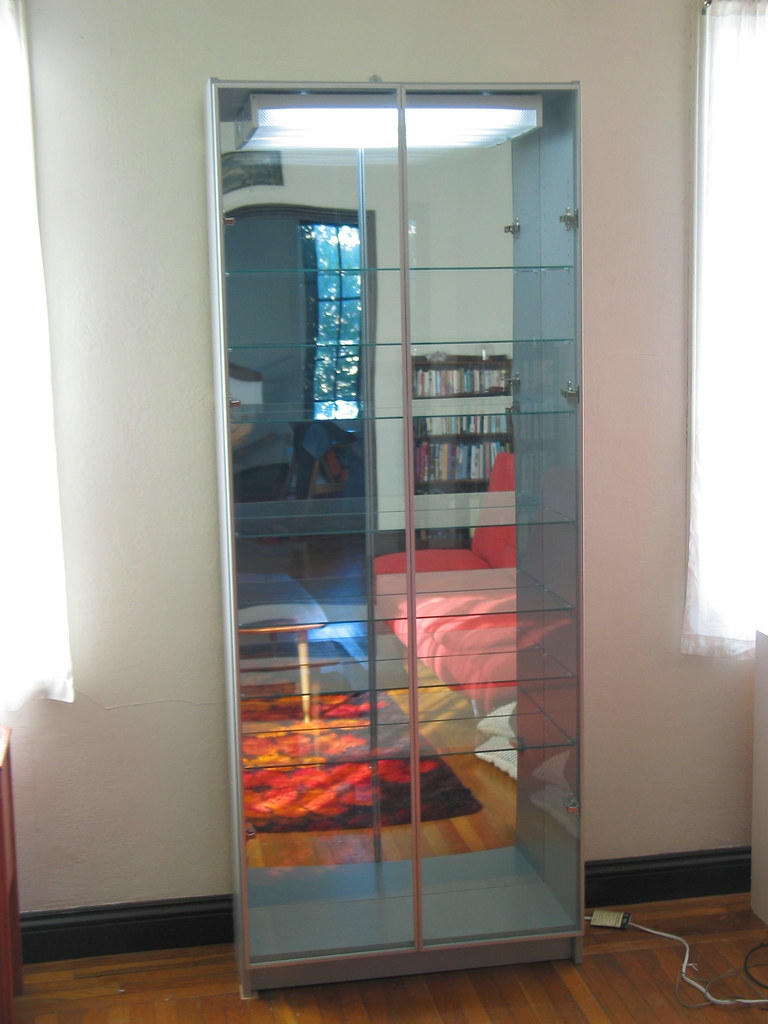
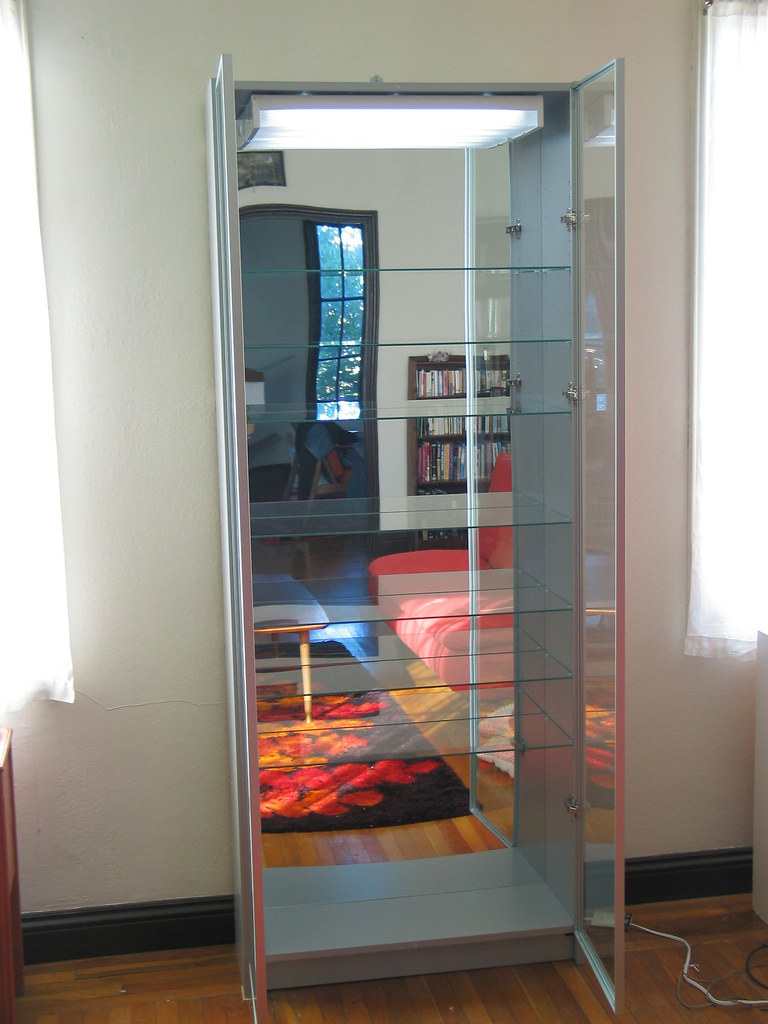
The finished display case
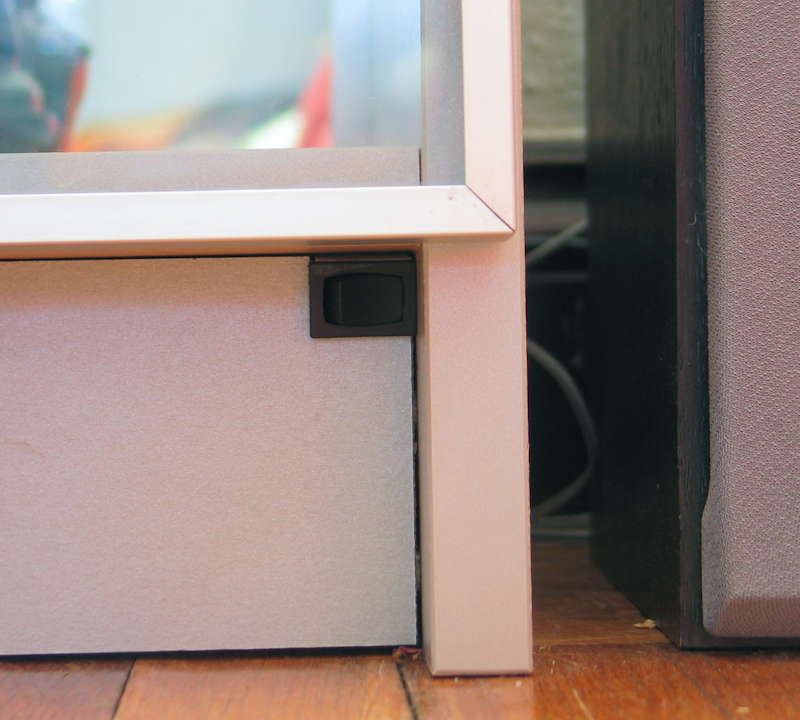
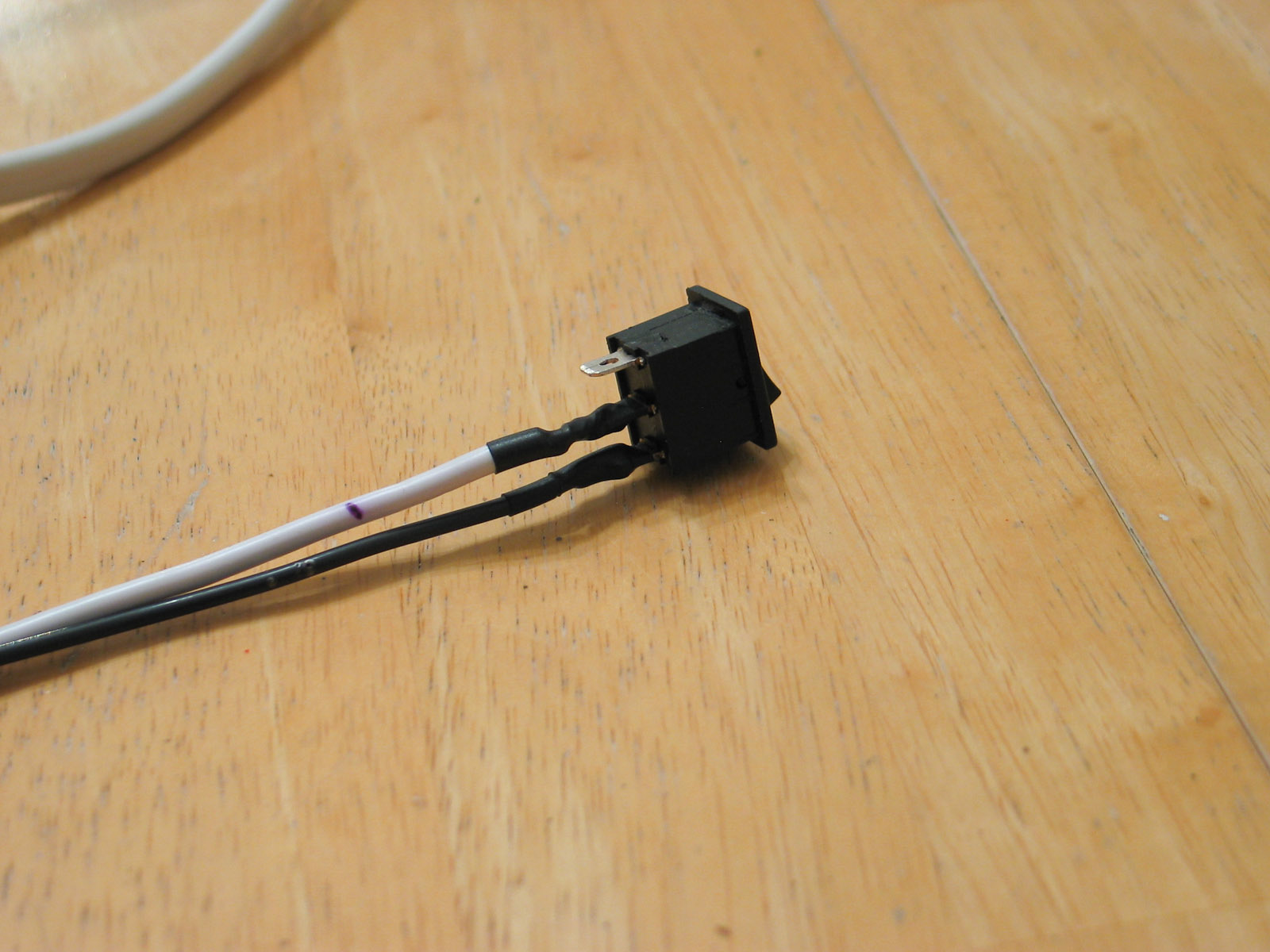
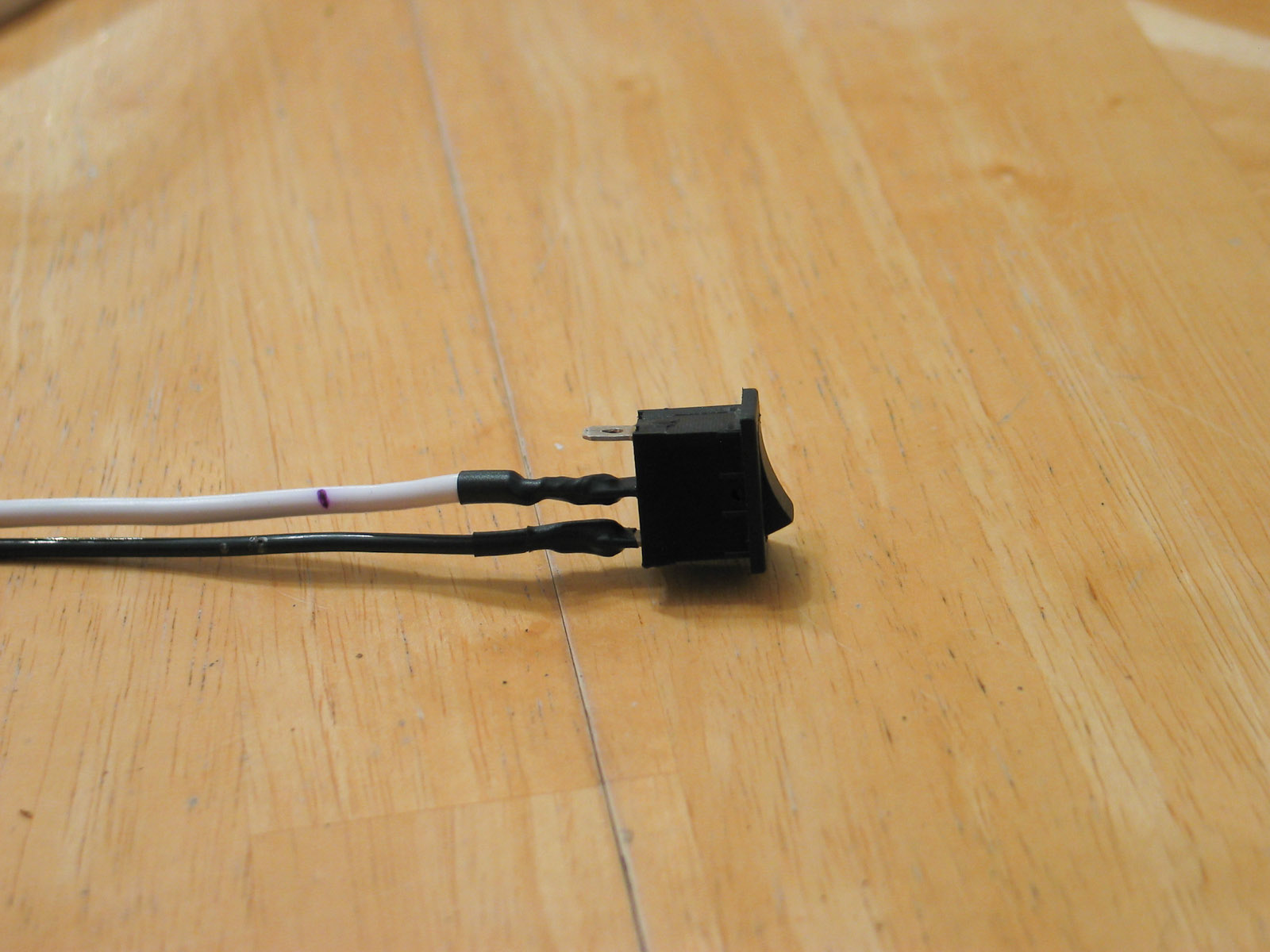
Closeup of the switch

First off, familiarize yourself with how Billy goes together via the diagram below courtesy of Ikea. In particular, note that Billy normally has a non-adjustable middle shelf for structural support, see how in step 9 the cardboard back is shown to slide into channels cut into the main side pieces, and note that the switch will be located in a corner of the slim panel that faces the front at the bottom, and the wiring hidden beneath and up the back of the case. We'll be replacing the cardboard back panel with a custom-cut piece of mirrored acrylic and adding a fluorescent fixture, glass doors, and a number of support beams on the back in lieu of the middle shelf.

Billy bookcase instructions

Next, gather the materials and components needed. You could possibly skip the soldering and use and combination of electrical tape and orange twist caps for all the wiring, but it's not recommended. The components cost me about $400. If this seems like a lot to you, go shopping for pre-fab glass display case and then come back and tell me that. ;)

Components

  • 24" long fluorescent light fixture with plastic diffuser panel with two T8 size lights.
  • Two T8 size fluorescent bulbs in the spectrum of your choice
  • Acrylic Mirror cut to size
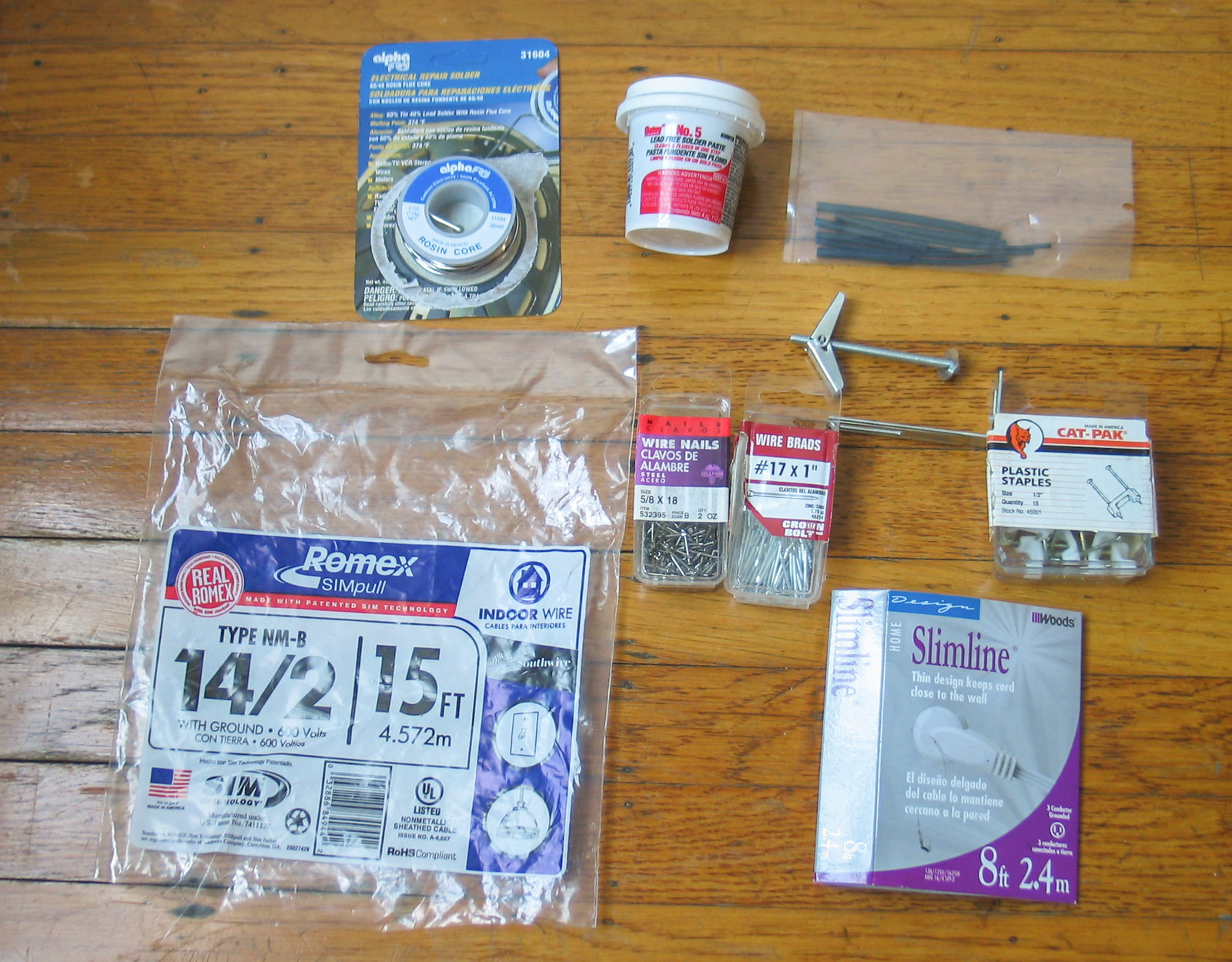
  • At least 8" of electrical cord with grounding wire. I used type NM-B.
  • Three prong extension cord with flat head. Go for the kind with flat plug so the case can be site right up against the wall.
  • Three orange wire heads, included with the light
  • Heat shrink tubing - I bought a variety pack for about $2
  • Small rocker switch
  • Standard, full size Billy bookcase. I went for a silver one. White will reflect the most light. A dark tone is recommended against.
  • Six glass Billy shelves
  • Two full size Ikea Morebo doors. I didn't see these listed individually on the Ikea site atm, so call or visit your local Ikea for availability.
  • Five square, 3' long, 1/2" thick dowels
  • Four lengths of 1/4" x 2" wood strips cut to exactly the width of the case (roughly 31.5", but wait to cut them until you can use the case itself to take an exact measure)
  • A couple staples of the white plastic sort with two integral nails used to secure wiring
  • A small sheet (8" x 10" is more than enough) of mat board, thick card, or other material roughly 1/16" thick.

Tools & Supplies

  • Glue - Liquid Nails, Gorilla Glue or wood glue
  • A few various nails and screws
  • Screwdriver
  • Fine-toothed hand saw. A hobby razor saw, jewelers saw, or even a hack saw would each work fine.
  • Electric drill
  • Ikea tool
  • Router with 1/8 bit and edge guide or jig. I believe the type we used was a trim router.
  • Microfiber cloth
  • Scratch remover
  • Cleaner/de-static
  • soldering iron
  • "helping hand" style soldering tool with magnifying glass and alligator clips
  • lighter or propane torch
  • rosen-core solder
  • flux paste
  • protective eyewear
  • measuring tape
  • ruler
  • boxcutter, utility knife, X-acto or similar.
A few of the supplies used for the display case
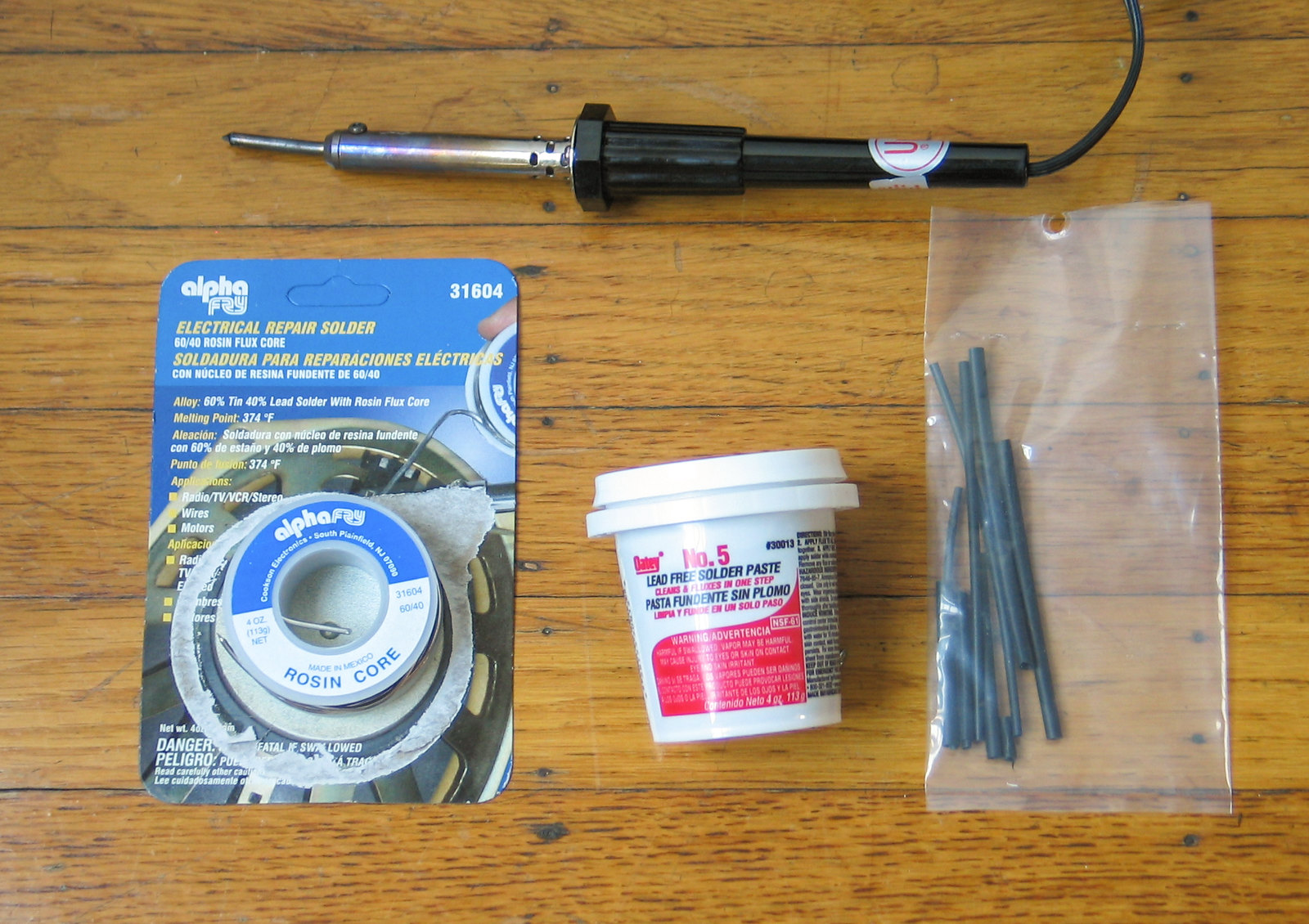
Selection of some soldering equipment for wiring. Not shown: "helping hands" tool, lighter.

Light Fixture

I expected to quickly source this component locally but was forced to go online. The model I bought is a Minka 1016-44-PL Utility Light. I purchased it on ebay at a store called Wayfair. It may still be available via the the specific listing.

Minka Utility Light 1016-44-PL

You'll need two 24" long, standard T8 size daylight fluorescent bulbs. I went for daylight spectrum. This light is of the same spectrum as daylight and spending the extra $$ on these will give a much more pleasing look. Fluorescent lights largely have a bad rap as big companies are unwilling to invest several times over per bulb when they are paying out for hundreds or thousands at a time. Note that daylight bulbs will still look a bit blue when you view the case from afar in a room otherwise lit by incandescent bulbs, but this is because the incandescent bulbs are orange, rather than any inherent blue-ness of the fluorescent bulbs. Because of this effect, I'm considering looking for a bulb with a spectrum closer to that of incandescent lights and keeping one daylight bulb and one warmer. Give some thought to what will work best for you.

Obtaining the Mirror

I considered several options for mirror, and the main consideration was between acrylic and glass. Acrylic had a bigger price tag but would mean a much lighter case and a more elegant solution in terms of design, and so I went with acrylic. Even though the custom-cut acrylic set me back about $120 and was the single most expensive component, the price of the case all told was a fraction of what a dedicated trophy case of this size would have cost me. The solution involving real mirror I considered was adding a back to the case made of 3/8" plywood and mounting two mirrors cut to size on the ply. Ikea had a very inexpensive, large square mirror last time I was there.

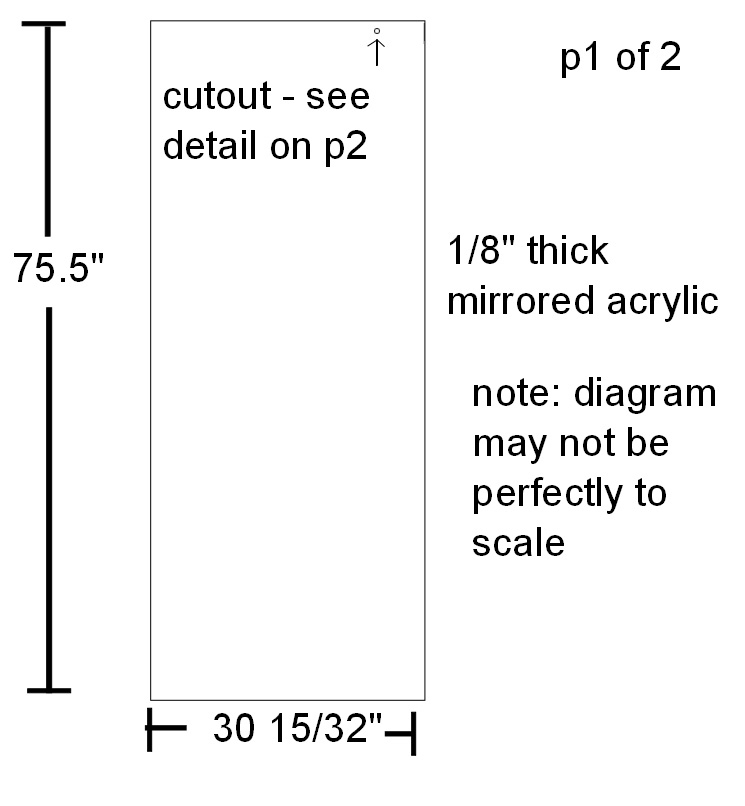
I'm really happy I went with acrylic, however. I had it cut locally at Tap Plastics. This worked out in the end but honestly, it required a good many more phone calls and emails back and forth than I could imagine would be necessary. Here are the plans I sent them.

Be sure to buy scratch remover, plastic cleaner (which is also a de-static agent), disposable microfiber wipes (they gave me a handful of these for free), and a microfiber cloth when you purchase the mirror. I made the mistake of thinking they weren't necessary and had to make an hour-long trip after work to get them later.

Enlarging the Grooves for the Mirror

This is an important step you can do anytime, and it's a good idea not to leave this until the last minute. Essentially the cardboard Billy back slides into grooves, and in order to accommodate the 1/8" acrylic mirror these need to be enlarged. As noted above my friend and I used a trim router for this purpose. One note here is that you have three options here for how to do the routing. You can enlarge right down the middle, eating a bit of wood on either side, or on just one side or the other. You should try to take wood away from the narrow, 1/2" side, so that it winds up being slightly less than 1/2". If you take it from the other side you might have some difficulty later as you put the case together.

Wiring

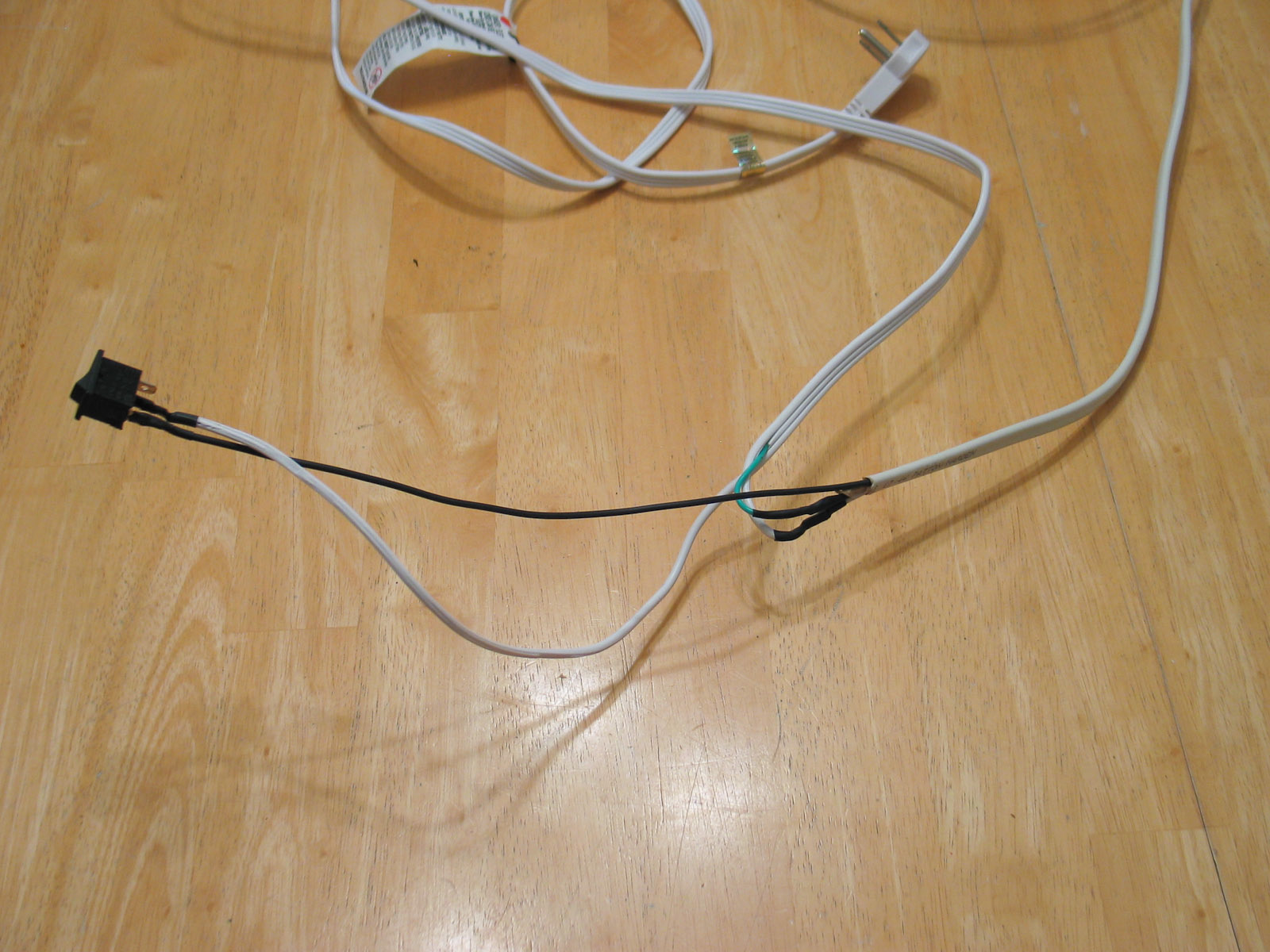
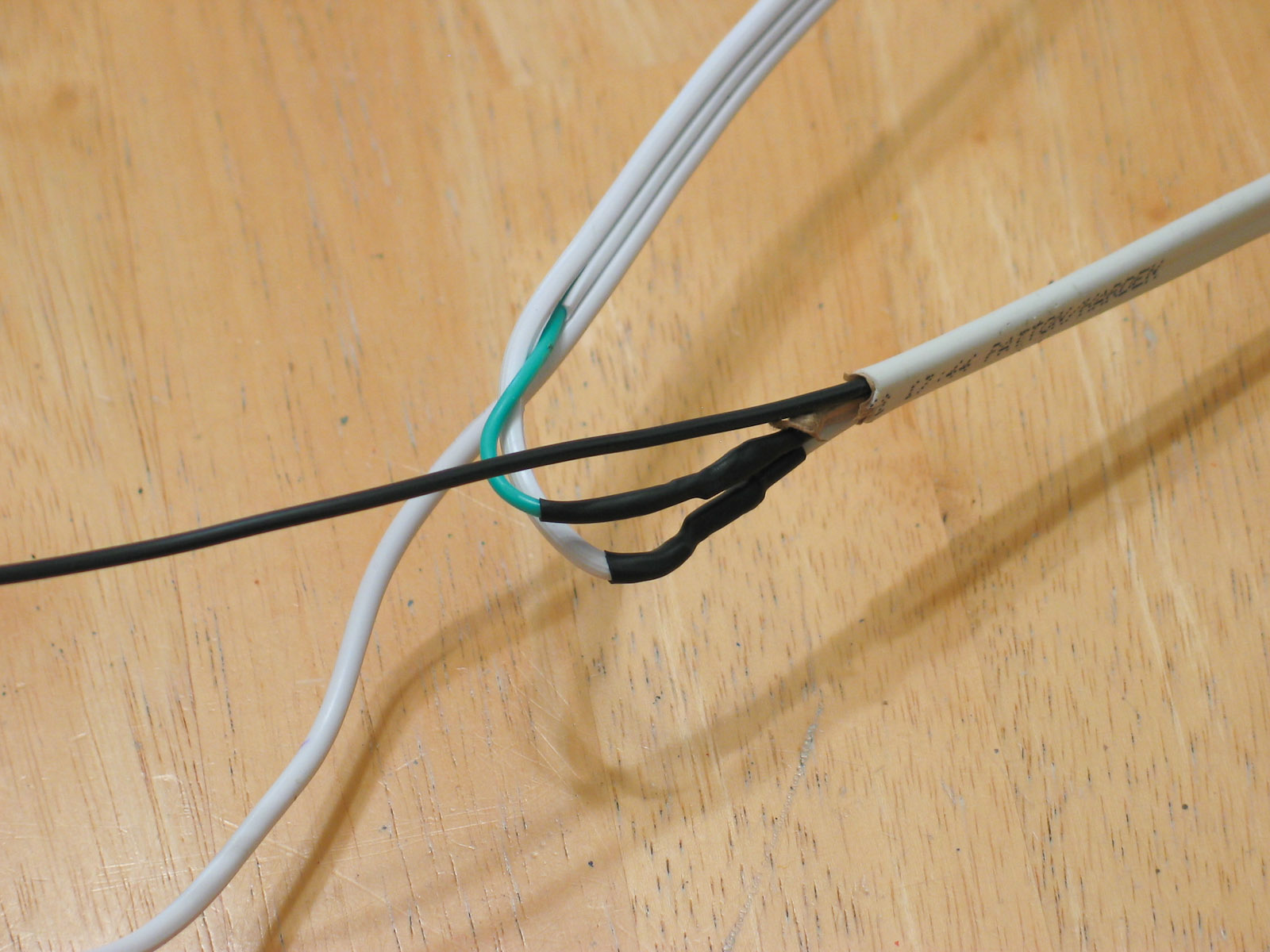
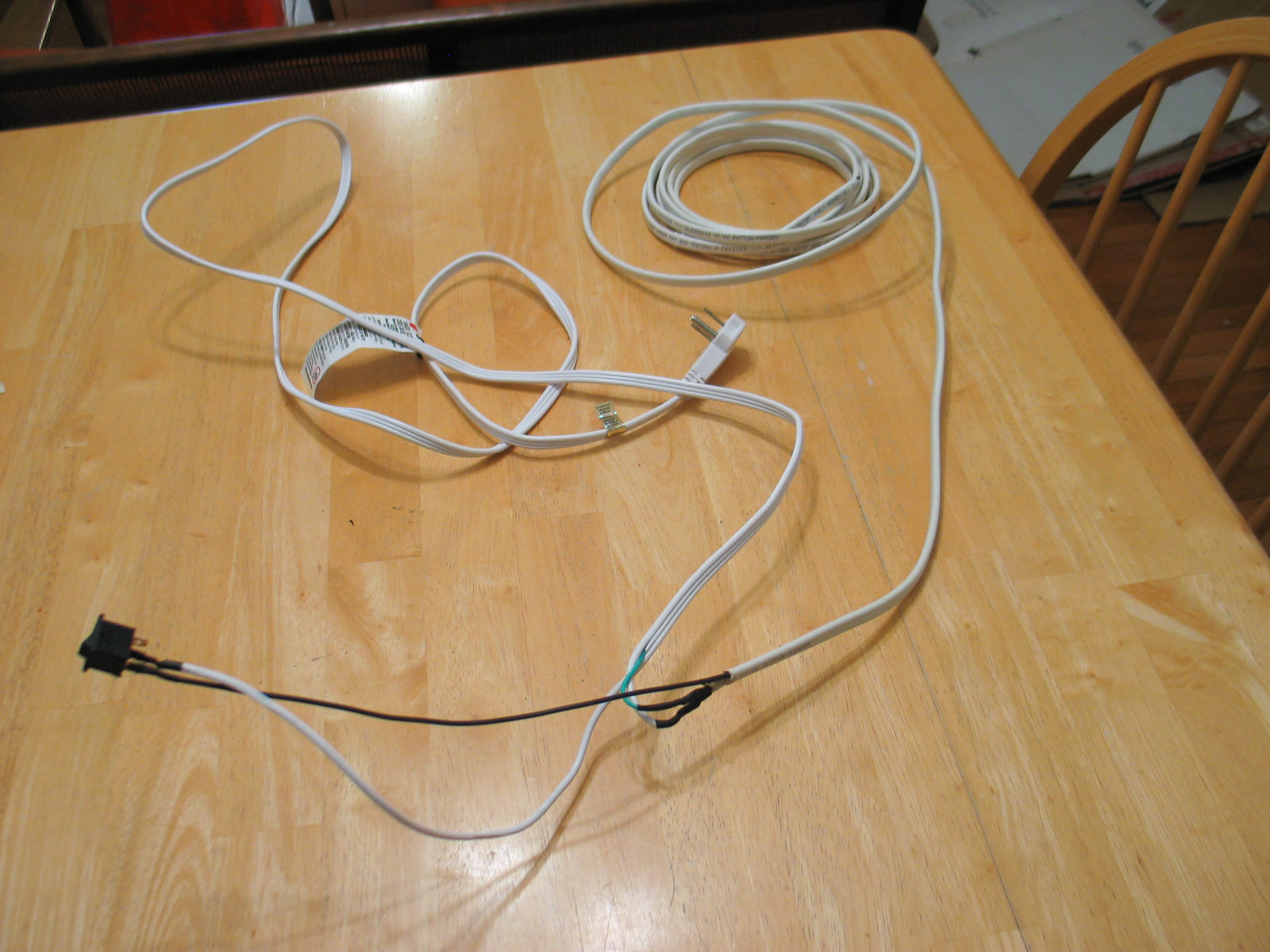
Do your wiring before you put the case together. Visualize the following: you're going to run a length of electrical cord from the hole in the mirror, down the back of the case along the right side (as you are viewing the case from the front) and underneath the case to the bottom right front corner, where you are going to install the switch. The switch is accessible from the front of the case. You're going to cut a small rectangular corner off the base plate and fit the rocker switch in this rectangular cutout from the front. Your cord going down the back of the case is going to go below and you're going to split off just the live wire, the black wire in my case, and attach it to the rocker switch. Next, you're going to take your extension cord with plug attached and cut off the sockets, leaving you with a cord and plug. Take the live wire from this cord and split it off like you did for the other cord, and attach this to the rocker switch as well. The third rocker switch contact point is left unused. Once the rocker switch is secure you can then match up the other two wires from one cord and attach them to the corresponding wires of the other cord. All of the above attachments should be soldered and secured with heat shrink tubing.

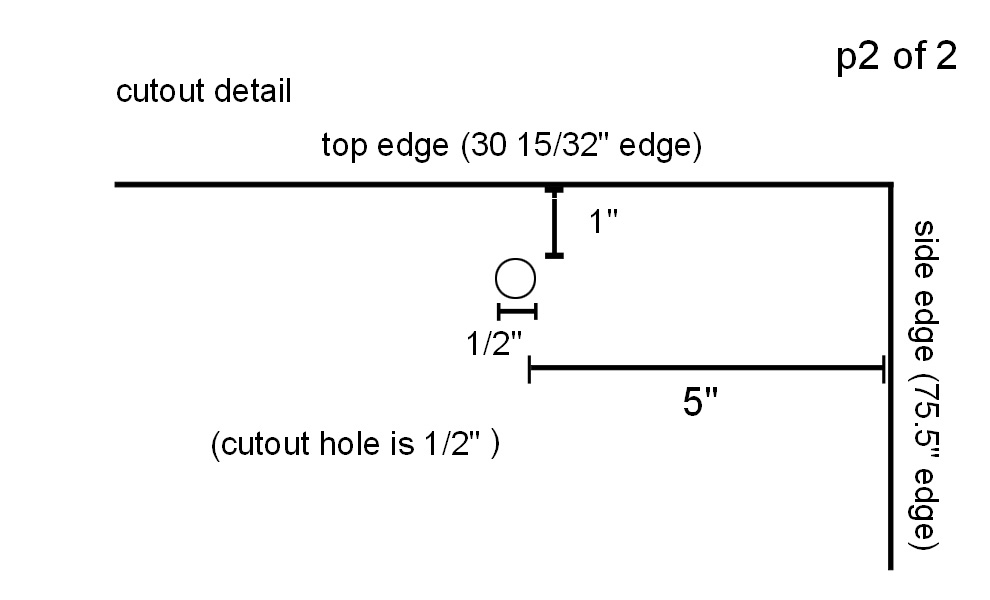
A some point go ahead and cut out a corner of the baseplate so the rocker switch can be pushed in from the front. I found I needed to do a few small modifications to my rocker switch involving cutting down some bits on the side and gluing on some small pieces of plasticard on two sides. I made the cutout with a hobby razor saw.

As you're examine the pictures above note that I have the two wires affixed to the rocker switch split off so they go perpendicular out from the main cord. If again you visualize the cord running down the back of the case, you can then picture how only these two wires need to be split off from the main cord and run under the case to the rocker switch. The other cords can continue on uninterrupted. Obviously to achieve this setup you're going need to cut off lengths of of the other two wires leaving the live wire longer (about 11 inches longer if memory serves but take your own measurements to be sure).

I chose not to solder the cord to the lamp, but use orange twist caps (provided with the lamp) instead. The reason is that if I soldered the points and then needed to get the lamp out of the case for any reason I would have to cut the wires.

I'm not going to present a full walk-through about wiring rocker switches or soldering. There are quite a few tutorials on each of these topics available on the web. Do be sure to:

  • Examine the Billy plans carefully.
  • Research anything you don't have experience in
  • "Measure twice, cut once."
  • Do a test run attaching the cords with orange caps rather than solder and make sure .
  • Use cord that has a ground wire (three wires). Don't just leave the lamp's ground wire "hanging out" and create a fire hazard.
  • Always observe proper safety precautions.

Rear Support

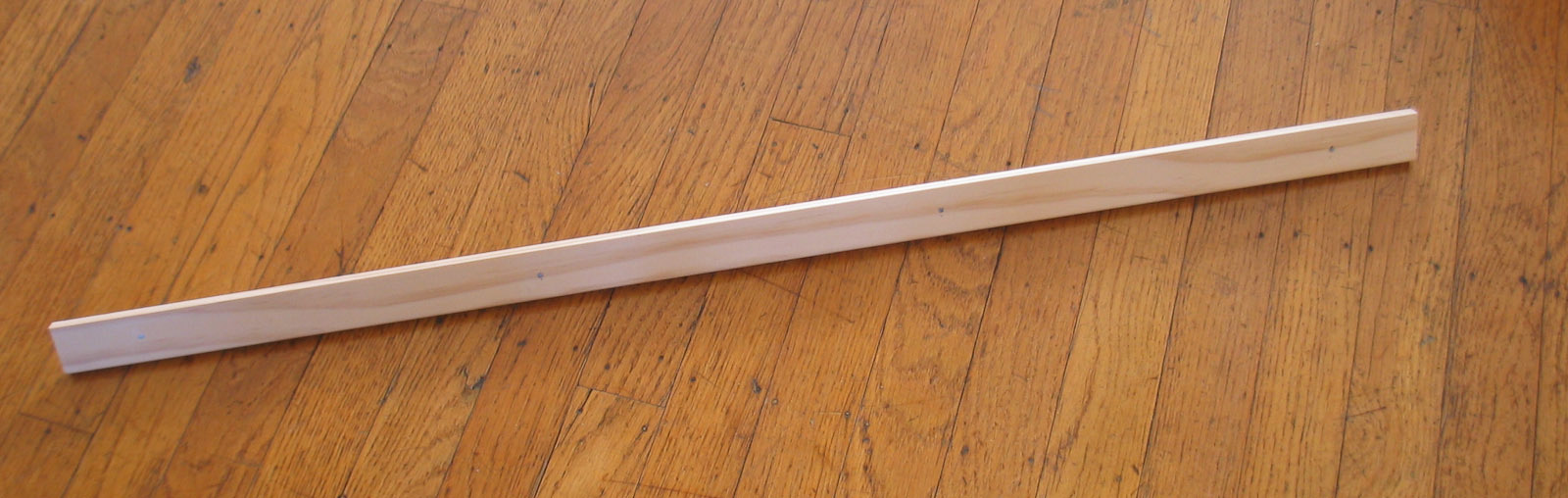
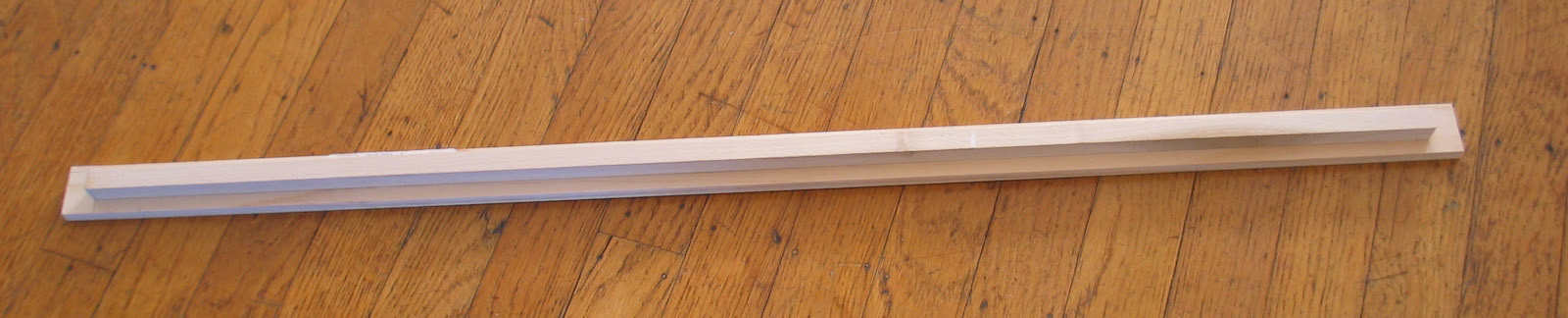
I mentioned that the Billy normally has an affixed middle shelf for support. A solid shelf in the case would require you mount two lamps, so I've opted to remove it and add support beams in the back of the case. In order to get measurements and fit these, you're going to need to partially build Billy. Ideally you should make these supports while you have Billy face down on the carpet and before you've fitted in your mirror. If you review the plans you'll be able to see why the following design is necessary.

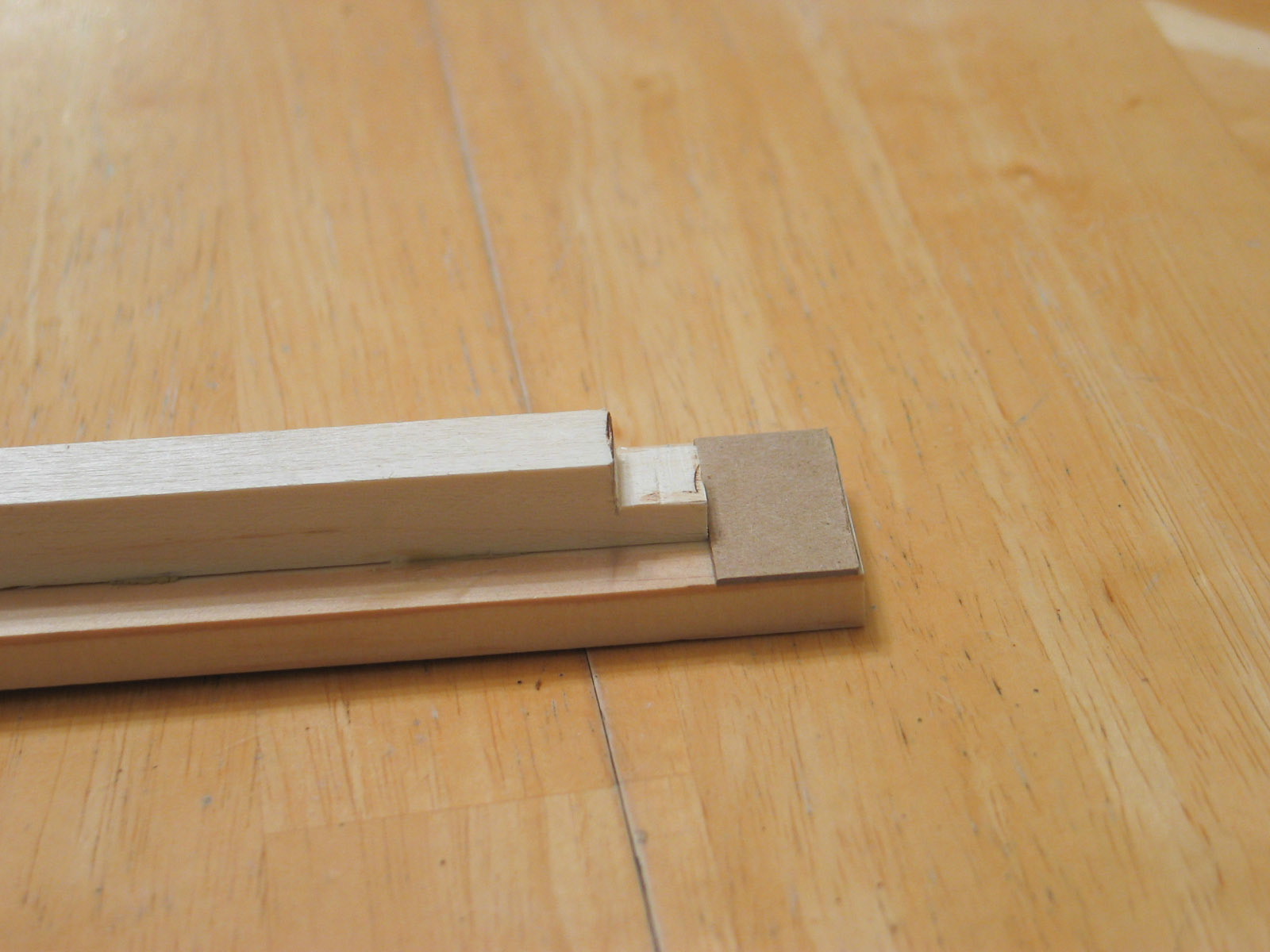
In the last picture, you'll see I've glued little rectangles of card to the ends at the points where I then nailed them to the back of the case. This was necessitated by our choice above to grab space on the narrower side of the channel during routing. This is an extra step here, but better this than risk not being able to get the case together easily. If this doesn't make a lot of sense now, come back to this point when you have the sides routed and the case fitted together on the floor and this will probably become clear.

The picture above also shows cutouts made in the supports that allow the cord to be slotted through the supports and thus elegantly kept in place without the need for additional staples.

Case Assembly

Once you have the above components ready, drill holes for the light fixture and affix it to the bottom of the top piece. Then you can assemble the rest of case per the Billy instructions. When it comes to inserting the mirror, you may want to hold off on "locking" in one side and fit your mirror directly into the slot from the side rather than actually sliding it all the way in from the top per the directions. You'll need to peal off a bit of the paper backing all around the mirror to put it in place. Don't pull it entirely off yet!

Steps

  1. Assemble the case on the floor but leave one side unlocked.
  2. Set the wires coming off the rocker switch in the rocker switch cutout so it can later be pushed in place from the front.
  3. Insert the mirror.
  4. "Lock" the sides of the case.
  5. Nail the supports. Don't glue the center of the supports to the mirror. I'm told this will make them visible from the front and damage the sensitive mirror backing.
  6. Run the cord up through the supports and affix it to the light with the orange twist caps.
  7. Push the rocker switch in place (I found I didn't need to glue it) and keep the wires in place under the case by hammering in a few wire staples on the bottom of the case.
  8. Test the lamp
  9. Very carefully life it upright.
  10. Peel off the paper backing.
  11. Wipe down the case with the cleaner/static-agent to dispel the huge amounts of static charge generated in previous step.
  12. Affix doors.
  13. Insert shelves
  14. Bolt the case to the wall
  15. Fill it up!

I guess I was wrong when I said I wasn't going to do an exhaustive tut! If you do this project yourself I'd be interested in hearing about it. And the above pics and more are on flickr for easy reference.

Thursday, February 23, 2012

Dwarven Forge: Filling in the Bow-tie Connector Sockets Tutorial

Even if you've only considered throwing your lot in with Dwarven Forge, you may have encountered the older sets that have little bow-tie connectors to knit the dungeon together. Dwarven Forge is beautiful stuff on the whole, but the ties are just plain unsightly and unwieldy. I never even considered actually using the ties as I build-on-the-fly rather than set up the dungeon ahead of time and don't have time to fiddle with little ties, and those empty little empty sockets are a blemish that I notice in-game.

And filling in those tie sockets is one of those projects you mean to do but don't get around to… Except I'm pleased to say I did get around to it back in January and here are the results. The pic shows a partial set but I got a whole basic set done. You can also click through for full-size pics if you like.

Dwarven Forge filled in bow-tie sockets Dwarven Forge filled in bow-tie sockets

Sorry, no fancy step-by-step photos here but I do have the steps, paint formulas and a wip shot for you in case you're considering trying this. Be advised there are no easy shortcuts here and you're in for a few hours of work. Definitely have an audiobook at hand.

Step one, I filled in the sockets 2/3 full with pre-mixed concrete patch. Anything archival will do, and you could honestly just skip this step and go right to the DAS clay if you prefer.

The stuff I'm talking about:

Pre-mixed Concrete Patch

Step two, I filled in the remaining space with a mix of DAS airbake clay and white glue. I used the spatula end of a basic sculpting tool and my finger for this. When this was dry I carved the lines between the stone slabs back in with a box cutter and did some detailing with a sculpting needle. You can see I used terracotta DAS but white would probably leave your fingers less colorful.

Here's what DAS looks like in the package

DAS Airbake Clay

And here's the sculpting done and the painting yet to come:

Dwarven Forge filled in bow-tie sockets

The last step is painting over the patched bits. I use cheap craft paint, brands Delta Ceramcoat, FolkArt and Americana. Just a quick aside, my local Michael's no longer stocks Ceramcoat and I'm getting a little nervous as certain of my colors run low. Let me know if you have a source for these in California. Maybe Jo-Ann fabric and craft? Anyway, here's the process I used:

  1. Base coat: 50/50 mix of Ceramcoat Charcoal and Americana Charcoal. The Americana is very brown and the Ceramcoat very blue-grey. Mixing the two is a good match for the Dwarven Forge floor base color.
  2. Then do several progressively lighter passes, adding the following to base coat mix. I do the lighter passes a little splotchy but not quite a dry-brush technique.
  3. Add FolkArt Raw Sienna and Ceramcoat Hippo Gray. The dark brown-gray + Raw Sienna = greenish and the Hippo Gray can pull it back toward Neutral as needed.
  4. Then add Americana Light Avacodo. This color is the closest match I've found in a single paint to the green tone in the Dwarven Forge.
  5. Add Ceramcoat Mudstone or a light neutral of your choice. Ceramcoat Territorial Beige may be of use somewhere around here too. I tend to have a number of paints on my pallette and feel as I go.
  6. Wash of base color. That's a thin wash made with opaque paint and lots of water. This is important as it brings the colors together.